

In the first part of this series we cast the molds from plaster and in the second part we assembled and constructed the tiles into a modular dungeon set.
Now we’re ready to apply paint.
1. Gather your painting supplies
Apple Barrel brand acrylic paints are inexpensive and probably available at your local big box retailer or craft store. (More expensive brands of paints – acrylic or otherwise – are available, too.) Our set will need to replicate stone floor tiles and water in a pool, so I’ve chosen this range of color. Likewise, brushes are available at the same kinds of stores. I prefer bushy fat heads for broad stroke work, which most terrain painting is. If I need to do any details, I’ll use a 00 or 0.5 brush from my miniatures painting set. Be sure to have water on hand to thin out the paint. With dark colors, you will be refreshing your water supply a lot so dark colors from the water bowl don’t mix with the lighter paint colors.

Gather your painting supplies before you begin. Acrylic paints, brushes, a water dish and a pallet for mixing the paint. You’ll be using a lot of paper towels, too.
I work in acrylic for three reasons: 1) they are inexpensive, compared to oils or inks; 2) being water based, they are easy on the cleanup; 3) they are forgiving in that it will dry fast. If you make a mistake, you can paint over it with most any other color or white with little fuss, then correct with the color of your choice.
2. What has Brown done for you lately?
Set aside the pool tile, we’ll get to that one later. First, we need to lay a coat (or two, or three) of brown paint on all the other pieces. Brown is a nice dark color and provides a nice base for the stone work. Be sure not to leave any white showing. You may have to go over some areas more than once (especially if there’s any glue on the surface pieces).

Painting can be fun for gamers of all ages.
Some use a primer as a base coat, and that’s OK. But I find that for the most part plaster takes acrylic paints well enough without a primer coat.
3. Jump in the pool
Painting water for the pool is a good way to get your feet wet in the way paint of different colors and hues can add texture.
Unlike the stonework, where we are working dark to light, we’ll in the opposite direction to give the impression the pool’s depth is greater in the center. So we start with a coat of light blue.

Feeling blue?
Then we mix a darker blue color with the existing light blue to get a darker shade. This we lay over the previous layer, but leave the edge alone.

Our pool is taking shape. Dip your toe in and see.
Lastly, I use a purer shade of blue for the center of the pool. You get the idea.

Care to swim in the deep end?
Once the water section has dried, you can paint the stonework section with more brown (which I’m pretty sure you’re tired of looking at). Now you have a chocolate bar dungeon!
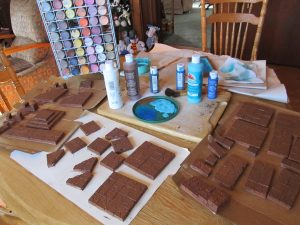
You have a chocolate bar dungeon. Looks good, but there’s still some more work to be done.
Next time we’ll employ some wet and dry brush techniques to make your dungeon tiles really pop.













Just wanted to say that I’m loving this series of posts. Really enoying it, and it’s making me want to dig out my old paints and do some work again. Nice.
These are great, Tony! Keep ’em coming!
I too am wanting to make “dungeon blocks” again. I just gotta find the time… maybe next winter…
Have you considered spray paint for the base layers? I guess, you may not actually need it if the acrylic takes well, but spraying can be a lot faster for base coats on a whole bunch of tiles, minis, and the like.
@Quaid Rayn – Thanks. Enjoy getting back into painting.
@Steamcrow – Winter’s not over, yet! Give it a go. (And it’s Troy, not Tony, but we’re all friends in here in gnomeland)
@Razjah – Spray paint vs. brush. For me, a terrain set is on the brush side of the equation. Time isn’t an issue so much. Besides, I find spraying tiles doesn’t always get into the hard-to-reach areas anyway. So, you’re picking up the brush to do touchups anyway. I prime minis with spray for convenience, for example. The surface is a factor too. Metal and plastic minis really need primer to take acrylic paint. But the plaster does just fine. Besides, by the time this is done, there will be at least three, if not possibly, five layers of paint on the tiles anyway. In that case, the utility of primer is lessened.
You know, Troy, Woodland Scenics do a nice fake water product. If you ensure that pool is properly sealed (by caulking the seams with glue) you could add a layer of it over the top of the painted dungeon tile for an effect you won’t believe til you see it. The “wow” factor is well worth the time and effort.
You can find the product at any hobby store that caters to serious model railroaders.
@Roxysteve – You’ve anticipated the sidebar that accompanies Part 4 of this series.
@Troy E. Taylor – Whoops! Curse these ESP powers!
Hey Troy.
For your pool you could pour in a little Acrylic Medium… which is like acrylic paint but with no pigment… so it dries transparent. Your blue would still show through and it would give some depth to your piece.
It would be a cheaper option than resin and might look good. I’d use glossy medium… but matte might be alright.
Good luck with the dry brushing.
Phil
@philipstephen – Another excellent tip. Thanks.